Jan 25, 2026
The Shape of Creative Delay
A reflective examination of procrastination in design as a lived condition of work, where delay emerges from uncertainty, context, and attention rather than from weakness or lack of discipline.
Creative process
Design work
Attention
Delay Without Stillness
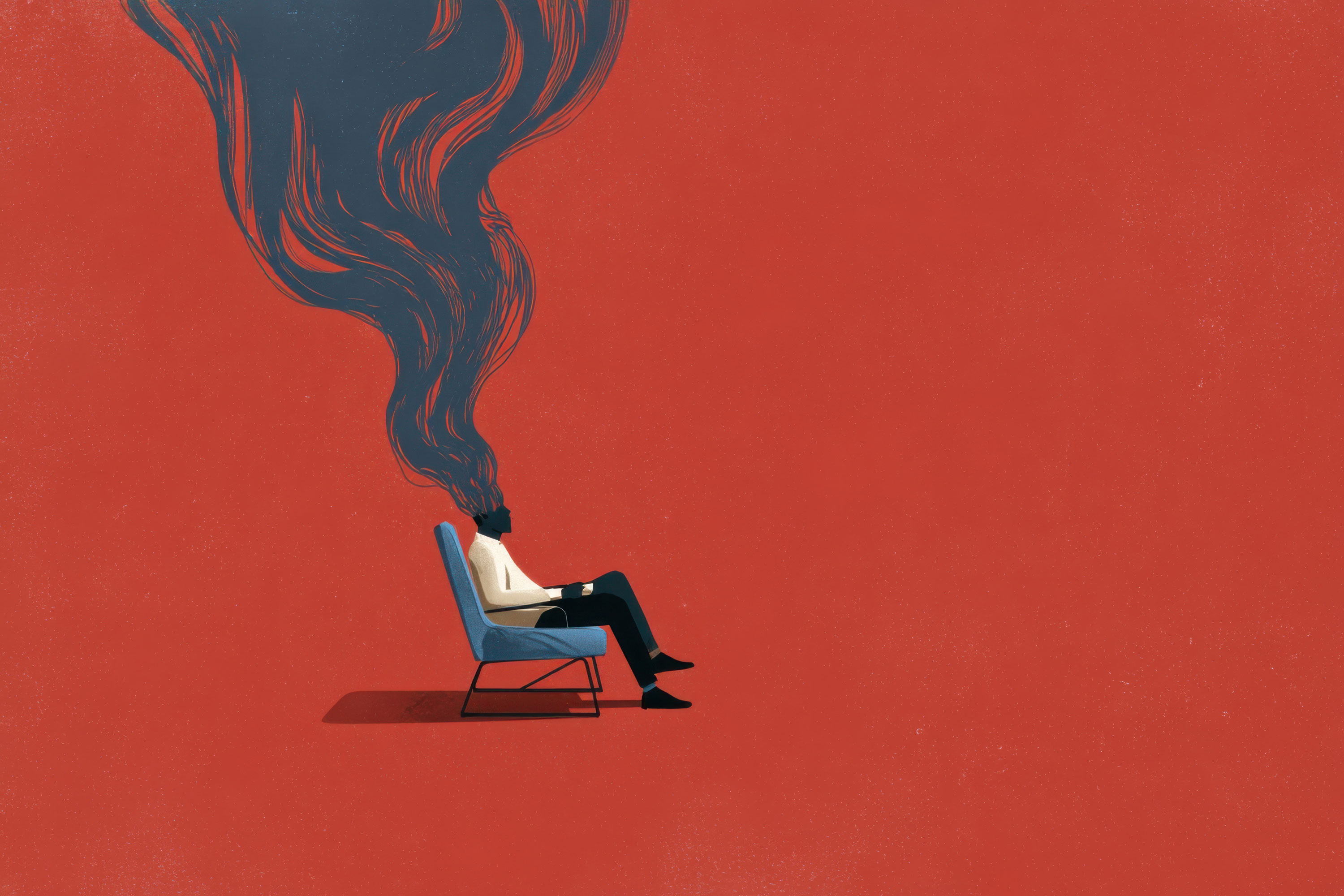
Procrastination in design rarely looks like stopping; more often it looks like motion that never quite reaches the place where a decision becomes real and irreversible.
In design work, procrastination rarely resembles empty time. The day fills itself easily. Files open without resistance, cursors blink patiently, reference folders grow denser, grids become cleaner, and naming conventions become more elegant. From the outside, and often from the inside, everything appears to be moving. Yet the actual project remains untouched in its core. What is postponed is not effort, but exposure — the moment when a choice hardens into something that can be seen, questioned, and possibly rejected.
This is what makes creative delay so convincing. Many of the actions involved are genuinely useful. Organising components, refining styles, and collecting visual material are not distractions in themselves. They become procrastination only when they replace the act that would make the work irreversible. As long as nothing decisive happens, the project stays safely hypothetical. It exists as potential rather than reality, and potential cannot yet be wrong. Design as a discipline makes this especially easy. Unlike tasks with strict rules and clear outcomes, design invites interpretation. There is rarely a single correct answer, and that openness quietly shifts responsibility onto the person making the choice. The absence of certainty does not always feel liberating. More often, it creates a low-grade tension that makes hesitation feel reasonable. Delay becomes a way to manage that tension without confronting it directly.
Over time, this pattern subtly reshapes the experience of work. Tasks begin to carry an emotional charge disproportionate to their actual complexity. Opening a file feels heavier than it should, not because the work is difficult, but because it has been avoided long enough to gather meaning. Procrastination, then, is not simply a loss of productivity. It is a slow distortion of the relationship between attention and action, where movement continues but direction dissolves.
Living With Uncertainty
Living With Uncertainty
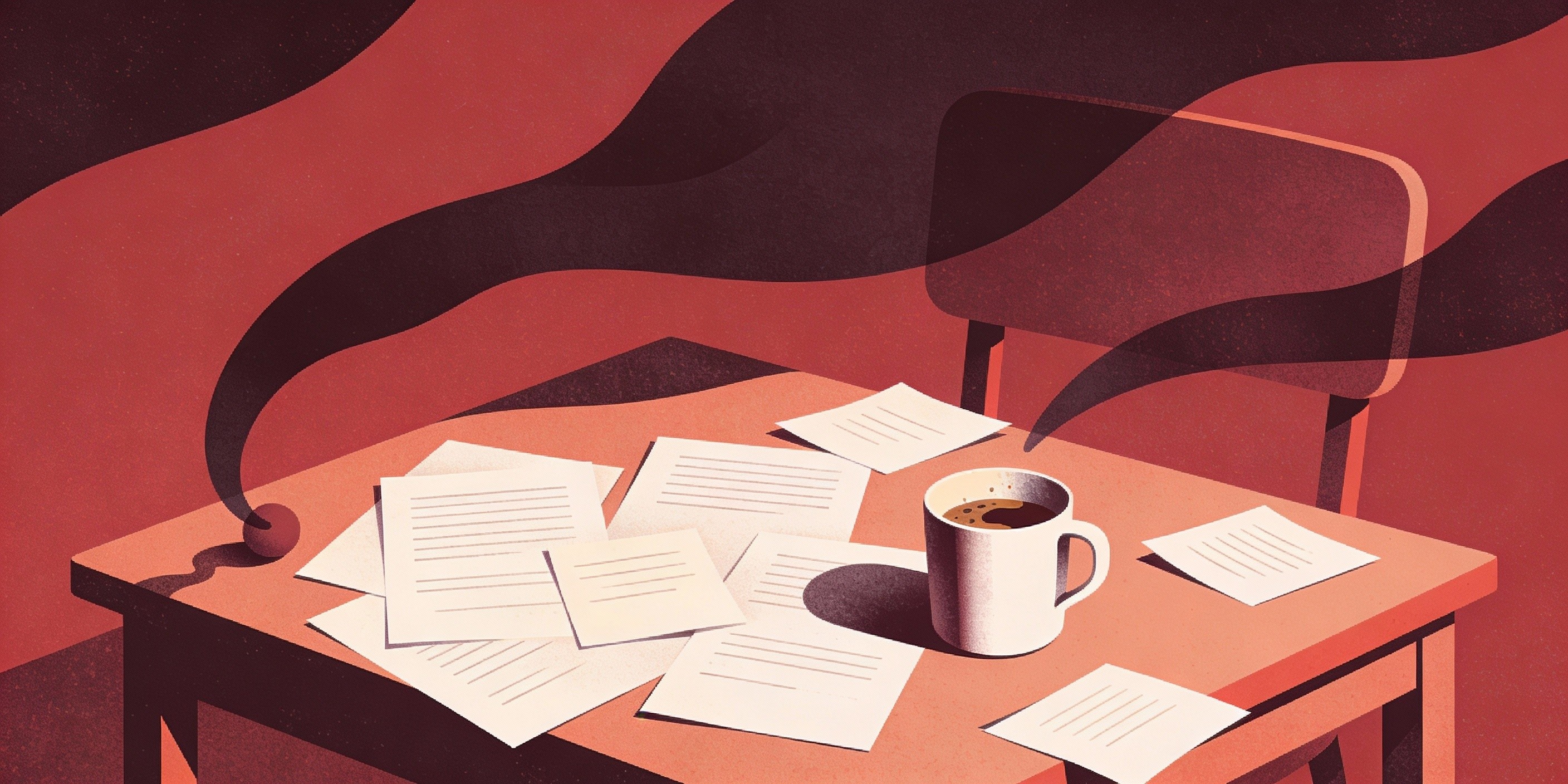
At the center of most creative delay lies uncertainty, not as an abstract concept, but as a daily, embodied experience shaped by unclear boundaries and subjective evaluation.
Design rarely begins with full clarity. Briefs arrive incomplete, goals evolve mid-process, and constraints reveal themselves only after decisions are made. This openness is often celebrated, yet it demands a tolerance for ambiguity that fluctuates with energy, context, and experience. When uncertainty exceeds what the moment can comfortably hold, the mind looks for ways to narrow the field. Procrastination offers that narrowing by postponing the moment where uncertainty must be confronted directly.
In practice, this often means gravitating toward tasks that feel contained. Adjusting spacing, cleaning files, and refining small details provides quick feedback and a sense of order. These actions are finite and predictable. They do not ask difficult questions or require commitments that ripple outward. Delay, in this sense, is not about avoiding work but about choosing work that feels safer.
Evaluation adds another layer. Design decisions are rarely judged in isolation. They pass through clients, colleagues, and stakeholders, each with their own language and expectations. Anticipating that judgment, even unconsciously, changes behaviour. Drafts stay private longer than necessary. Alternatives multiply. The work circles itself, refining without advancing, as if more preparation might eventually neutralise critique.
The lack of a clear definition of “enough” intensifies this cycle. When completion is vague, improvement has no natural stopping point. Perfection slips from aspiration into avoidance. Procrastination thrives in this ambiguity because delay can always be justified as care, thoroughness, or professionalism. The problem is not that standards are high, but that they remain unfixed. Over time, uncertainty-driven delay becomes self-reinforcing. Each postponed decision raises the bar for the next one. Starting feels harder because starting now carries the weight of all the time already lost. What began as caution slowly hardens into inertia, not because the work grew more complex, but because hesitation accumulated around it.

Context Leaves Traces
Context Leaves Traces
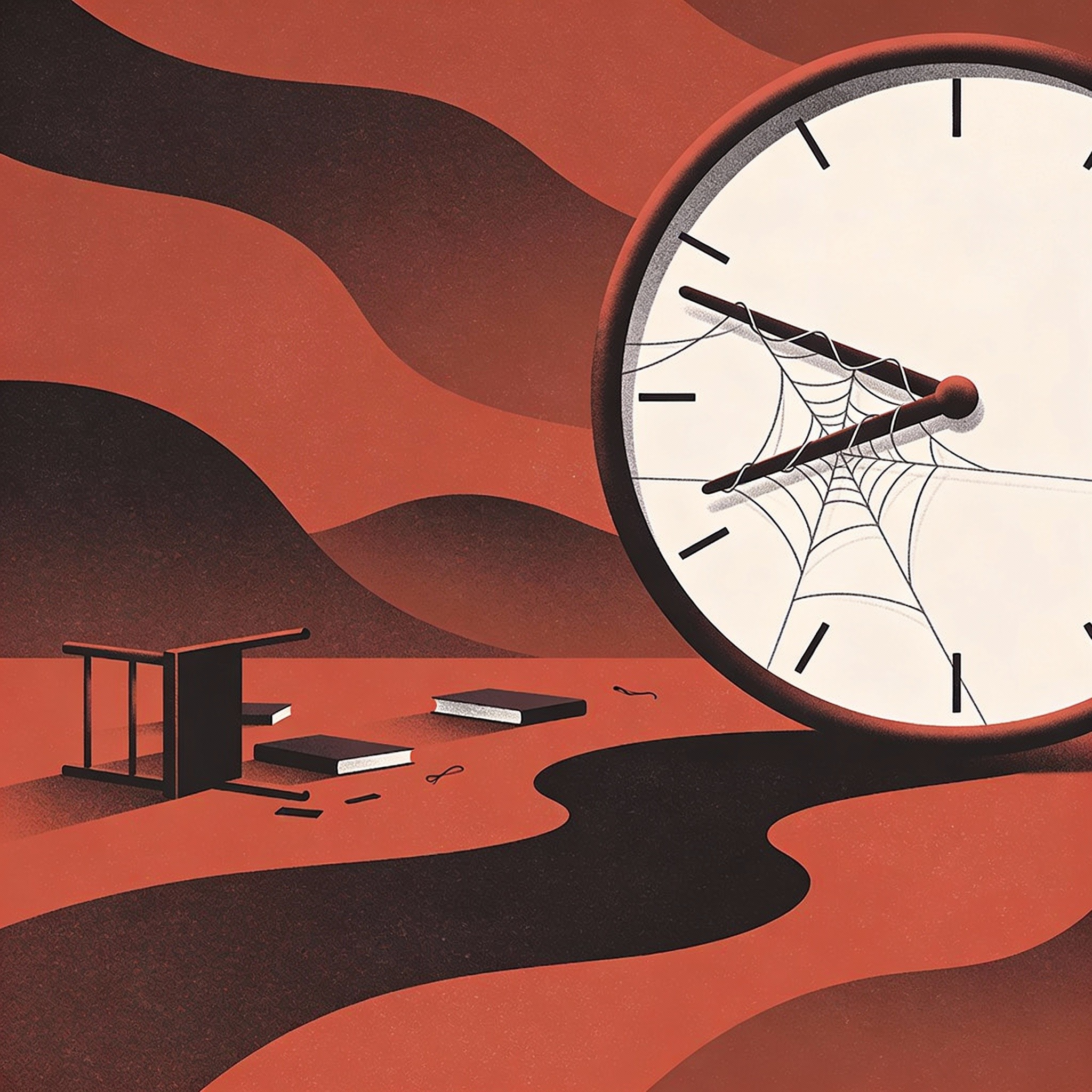
Creative delay is shaped as much by environment and memory as by tasks, carrying the imprint of fatigue, organizational climate, and unresolved past experiences.
Energy matters more than it often appears. Design work draws heavily on attention, synthesis, and the ability to hold multiple variables in balance. When the body is tired, overstimulated, or recovering, that balance collapses quickly. In these states, the mind naturally avoids complexity. Procrastination then looks like a preference for simple, mechanical actions — the kind that can be completed without holding the whole problem at once. Work environments amplify or soften this tendency. In places where feedback is inconsistent, priorities shift suddenly, or effort is routinely devalued, hesitation becomes protective. Why commit fully when the ground may move without warning? Delay, here, is not a failure of character but a rational response to instability. Procrastination functions as a buffer against wasted effort and emotional exposure.
Memory adds a quieter influence. A single difficult project can leave behind a residue that shapes future behaviour. When a new task resembles an old one — in tone, structure, or even visual language — the body may respond with resistance before the mind catches up. The delay is not about the present task, but about avoiding a repetition of past discomfort. Procrastination becomes a learned reflex. Comparison sharpens this effect. Finished work elsewhere appears clean, confident, and resolved. The struggle behind it remains invisible. Against this backdrop, one’s own unfinished work feels lacking by default. Delay preserves the illusion that the work could still become something better later, that its current roughness is temporary rather than revealing. In this way, procrastination protects identity as much as it postpones action.
These forces rarely act alone. Fatigue, environment, memory, and comparison overlap, creating conditions where delay feels not only understandable but sensible. Treating procrastination as a purely individual flaw ignores this context and misses the reasons it keeps returning.
Tools as Gentle Constraints
Tools as Gentle Constraints
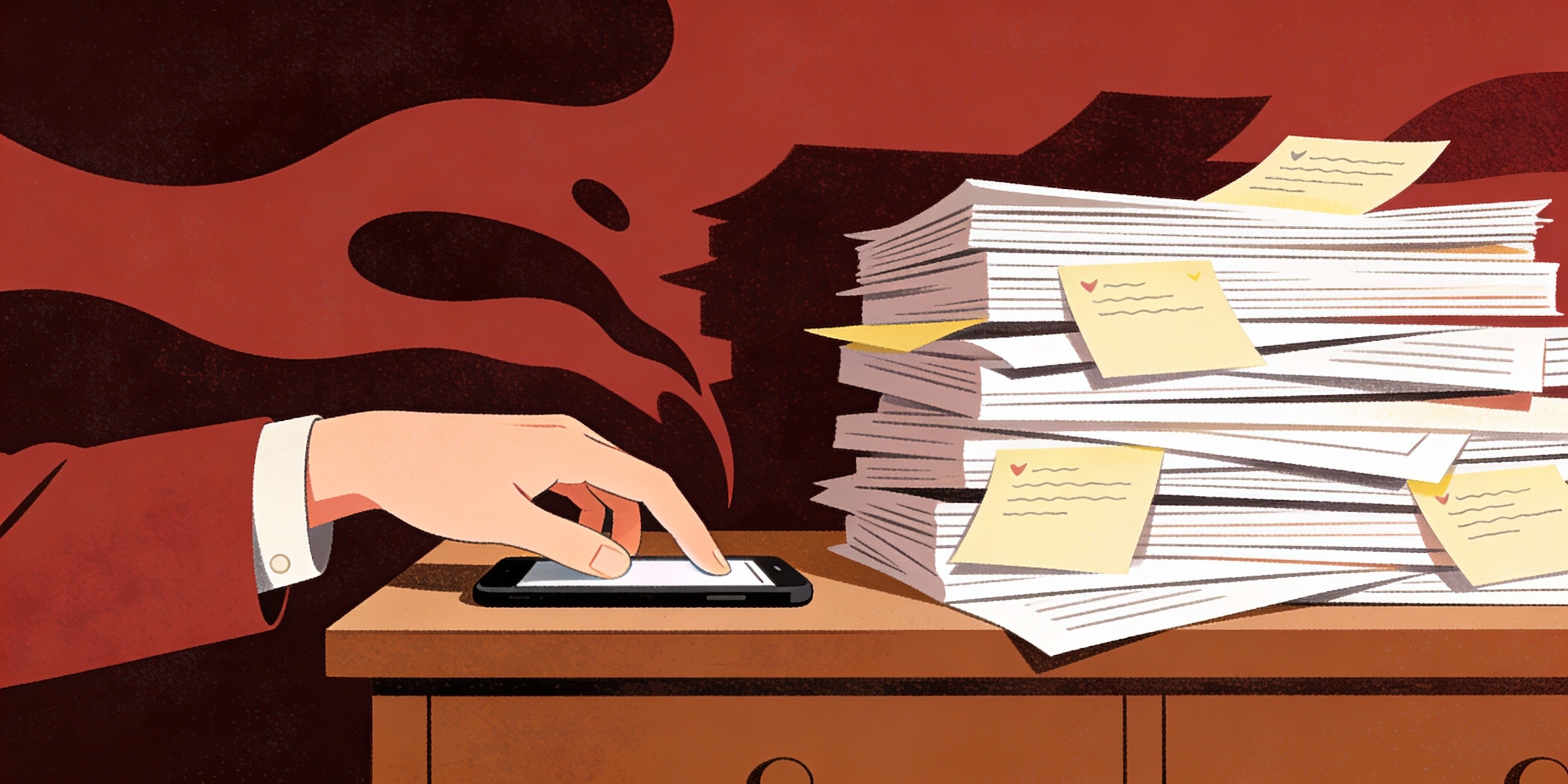
When delay becomes persistent, progress often resumes not through pressure or self-control, but through small external structures that narrow choice, lower friction, and make entry into work less emotionally charged.
Procrastination rarely disappears at the level of insight. Even when the reasons for delay are clear, attention and energy still need a concrete bridge back into action. At this stage, tools become relevant not as symbols of productivity or discipline, but as modest environmental adjustments. Their role is not to persuade or motivate, but to quietly reshape the conditions around work so that starting requires less internal negotiation.
What makes a tool useful in this context is not its power, but the type of constraint it introduces. Some tools reduce ambiguity by forcing tasks to be named in plain language. Others limit time so that work feels finite rather than endless. Still others remove competing stimuli long enough for momentum to appear on its own. In all cases, the effect is indirect: procrastination weakens because the reasons for delaying are no longer as strong. Tools that clarify commitment tend to work by exposing vagueness. When an intention must be written down concretely, it becomes obvious whether the task is actually actionable or still conceptual. This shift often lowers resistance without any additional effort, simply because the work now has edges. Similarly, time-based tools change the emotional framing of work. A bounded interval suggests presence rather than performance, making engagement feel safer when motivation is fragile.
Blocking and tracking tools operate at the level of attention. By removing alternatives or making patterns visible, they turn procrastination from a moral struggle into a logistical one. Delay becomes something observable and adjustable rather than something to fight internally. Communication tools play a quieter role, lowering the threshold for expression so that unfinished thoughts can exist without immediate judgment. Once something exists, even imperfectly, avoidance loses part of its power. Seen together, these tools form a loose ecosystem rather than a system. Each addresses a slightly different reason for delay, and none of them function as a cure. Their shared value lies in how they shorten the distance between intention and action, allowing work to begin without requiring certainty, energy, or confidence upfront.
Todoist — helps turn diffuse intentions into plainly worded tasks that feel finite rather than abstract
TickTick — similar in spirit, with a stronger emphasis on time and gentle structure
Forest — frames focus as a temporary, contained state instead of a demand for sustained discipline
Simple timers or physical clocks — often effective precisely because they carry no narrative or pressure
Freedom — removes competing stimuli across devices, creating a temporary quiet zone for attention
Cold Turkey — a stricter alternative when softer limits are too easy to bypass
RescueTime — makes patterns of attention visible, shifting procrastination from a personal flaw to a structural issue
Notes apps or drafts — useful for lowering the barrier to difficult communication by allowing imperfection
None of these tools eliminates creative delay. Procrastination continues to surface whenever uncertainty, fatigue, or misalignment increase. What changes is the relationship to it. With gentle external structure in place, delay no longer has to carry the full burden of managing risk and overload. Work resumes not through force, but through conditions that make it feel possible again.

FAQ
FAQ
01
How does the process work?
02
How much does it cost?
03
How will we communicate?
04
Will I receive all the files and rights?
05
Can the project be completed urgently?
06
Do you work internationally?
07
What if I’m not satisfied with the result?
08
Do you provide support after the project is finished?
01
How does the process work?
02
How much does it cost?
03
How will we communicate?
04
Will I receive all the files and rights?
05
Can the project be completed urgently?
06
Do you work internationally?
07
What if I’m not satisfied with the result?
08
Do you provide support after the project is finished?
Jan 25, 2026
The Shape of Creative Delay
A reflective examination of procrastination in design as a lived condition of work, where delay emerges from uncertainty, context, and attention rather than from weakness or lack of discipline.
Creative process
Design work
Attention
Delay Without Stillness
Procrastination in design rarely looks like stopping; more often it looks like motion that never quite reaches the place where a decision becomes real and irreversible.
In design work, procrastination rarely resembles empty time. The day fills itself easily. Files open without resistance, cursors blink patiently, reference folders grow denser, grids become cleaner, and naming conventions become more elegant. From the outside, and often from the inside, everything appears to be moving. Yet the actual project remains untouched in its core. What is postponed is not effort, but exposure — the moment when a choice hardens into something that can be seen, questioned, and possibly rejected.
This is what makes creative delay so convincing. Many of the actions involved are genuinely useful. Organising components, refining styles, and collecting visual material are not distractions in themselves. They become procrastination only when they replace the act that would make the work irreversible. As long as nothing decisive happens, the project stays safely hypothetical. It exists as potential rather than reality, and potential cannot yet be wrong. Design as a discipline makes this especially easy. Unlike tasks with strict rules and clear outcomes, design invites interpretation. There is rarely a single correct answer, and that openness quietly shifts responsibility onto the person making the choice. The absence of certainty does not always feel liberating. More often, it creates a low-grade tension that makes hesitation feel reasonable. Delay becomes a way to manage that tension without confronting it directly.
Over time, this pattern subtly reshapes the experience of work. Tasks begin to carry an emotional charge disproportionate to their actual complexity. Opening a file feels heavier than it should, not because the work is difficult, but because it has been avoided long enough to gather meaning. Procrastination, then, is not simply a loss of productivity. It is a slow distortion of the relationship between attention and action, where movement continues but direction dissolves.
Living With Uncertainty
At the center of most creative delay lies uncertainty, not as an abstract concept, but as a daily, embodied experience shaped by unclear boundaries and subjective evaluation.
Design rarely begins with full clarity. Briefs arrive incomplete, goals evolve mid-process, and constraints reveal themselves only after decisions are made. This openness is often celebrated, yet it demands a tolerance for ambiguity that fluctuates with energy, context, and experience. When uncertainty exceeds what the moment can comfortably hold, the mind looks for ways to narrow the field. Procrastination offers that narrowing by postponing the moment where uncertainty must be confronted directly.
In practice, this often means gravitating toward tasks that feel contained. Adjusting spacing, cleaning files, and refining small details provides quick feedback and a sense of order. These actions are finite and predictable. They do not ask difficult questions or require commitments that ripple outward. Delay, in this sense, is not about avoiding work but about choosing work that feels safer.
Evaluation adds another layer. Design decisions are rarely judged in isolation. They pass through clients, colleagues, and stakeholders, each with their own language and expectations. Anticipating that judgment, even unconsciously, changes behaviour. Drafts stay private longer than necessary. Alternatives multiply. The work circles itself, refining without advancing, as if more preparation might eventually neutralise critique.
The lack of a clear definition of “enough” intensifies this cycle. When completion is vague, improvement has no natural stopping point. Perfection slips from aspiration into avoidance. Procrastination thrives in this ambiguity because delay can always be justified as care, thoroughness, or professionalism. The problem is not that standards are high, but that they remain unfixed. Over time, uncertainty-driven delay becomes self-reinforcing. Each postponed decision raises the bar for the next one. Starting feels harder because starting now carries the weight of all the time already lost. What began as caution slowly hardens into inertia, not because the work grew more complex, but because hesitation accumulated around it.
Context Leaves Traces
Creative delay is shaped as much by environment and memory as by tasks, carrying the imprint of fatigue, organizational climate, and unresolved past experiences.
Energy matters more than it often appears. Design work draws heavily on attention, synthesis, and the ability to hold multiple variables in balance. When the body is tired, overstimulated, or recovering, that balance collapses quickly. In these states, the mind naturally avoids complexity. Procrastination then looks like a preference for simple, mechanical actions — the kind that can be completed without holding the whole problem at once. Work environments amplify or soften this tendency. In places where feedback is inconsistent, priorities shift suddenly, or effort is routinely devalued, hesitation becomes protective. Why commit fully when the ground may move without warning? Delay, here, is not a failure of character but a rational response to instability. Procrastination functions as a buffer against wasted effort and emotional exposure.
Memory adds a quieter influence. A single difficult project can leave behind a residue that shapes future behaviour. When a new task resembles an old one — in tone, structure, or even visual language — the body may respond with resistance before the mind catches up. The delay is not about the present task, but about avoiding a repetition of past discomfort. Procrastination becomes a learned reflex. Comparison sharpens this effect. Finished work elsewhere appears clean, confident, and resolved. The struggle behind it remains invisible. Against this backdrop, one’s own unfinished work feels lacking by default. Delay preserves the illusion that the work could still become something better later, that its current roughness is temporary rather than revealing. In this way, procrastination protects identity as much as it postpones action.
These forces rarely act alone. Fatigue, environment, memory, and comparison overlap, creating conditions where delay feels not only understandable but sensible. Treating procrastination as a purely individual flaw ignores this context and misses the reasons it keeps returning.
Tools as Gentle Constraints
When delay becomes persistent, progress often resumes not through pressure or self-control, but through small external structures that narrow choice, lower friction, and make entry into work less emotionally charged.
Procrastination rarely disappears at the level of insight. Even when the reasons for delay are clear, attention and energy still need a concrete bridge back into action. At this stage, tools become relevant not as symbols of productivity or discipline, but as modest environmental adjustments. Their role is not to persuade or motivate, but to quietly reshape the conditions around work so that starting requires less internal negotiation.
What makes a tool useful in this context is not its power, but the type of constraint it introduces. Some tools reduce ambiguity by forcing tasks to be named in plain language. Others limit time so that work feels finite rather than endless. Still others remove competing stimuli long enough for momentum to appear on its own. In all cases, the effect is indirect: procrastination weakens because the reasons for delaying are no longer as strong. Tools that clarify commitment tend to work by exposing vagueness. When an intention must be written down concretely, it becomes obvious whether the task is actually actionable or still conceptual. This shift often lowers resistance without any additional effort, simply because the work now has edges. Similarly, time-based tools change the emotional framing of work. A bounded interval suggests presence rather than performance, making engagement feel safer when motivation is fragile.
Blocking and tracking tools operate at the level of attention. By removing alternatives or making patterns visible, they turn procrastination from a moral struggle into a logistical one. Delay becomes something observable and adjustable rather than something to fight internally. Communication tools play a quieter role, lowering the threshold for expression so that unfinished thoughts can exist without immediate judgment. Once something exists, even imperfectly, avoidance loses part of its power. Seen together, these tools form a loose ecosystem rather than a system. Each addresses a slightly different reason for delay, and none of them function as a cure. Their shared value lies in how they shorten the distance between intention and action, allowing work to begin without requiring certainty, energy, or confidence upfront.
Todoist — helps turn diffuse intentions into plainly worded tasks that feel finite rather than abstract
TickTick — similar in spirit, with a stronger emphasis on time and gentle structure
Forest — frames focus as a temporary, contained state instead of a demand for sustained discipline
Simple timers or physical clocks — often effective precisely because they carry no narrative or pressure
Freedom — removes competing stimuli across devices, creating a temporary quiet zone for attention
Cold Turkey — a stricter alternative when softer limits are too easy to bypass
RescueTime — makes patterns of attention visible, shifting procrastination from a personal flaw to a structural issue
Notes apps or drafts — useful for lowering the barrier to difficult communication by allowing imperfection
None of these tools eliminates creative delay. Procrastination continues to surface whenever uncertainty, fatigue, or misalignment increase. What changes is the relationship to it. With gentle external structure in place, delay no longer has to carry the full burden of managing risk and overload. Work resumes not through force, but through conditions that make it feel possible again.
FAQ
01
How does the process work?
02
How much does it cost?
03
How will we communicate?
04
Will I receive all the files and rights?
05
Can the project be completed urgently?
06
Do you work internationally?
07
What if I’m not satisfied with the result?
08
Do you provide support after the project is finished?
Jan 25, 2026
The Shape of Creative Delay
A reflective examination of procrastination in design as a lived condition of work, where delay emerges from uncertainty, context, and attention rather than from weakness or lack of discipline.
Creative process
Design work
Attention
Delay Without Stillness
Procrastination in design rarely looks like stopping; more often it looks like motion that never quite reaches the place where a decision becomes real and irreversible.
In design work, procrastination rarely resembles empty time. The day fills itself easily. Files open without resistance, cursors blink patiently, reference folders grow denser, grids become cleaner, and naming conventions become more elegant. From the outside, and often from the inside, everything appears to be moving. Yet the actual project remains untouched in its core. What is postponed is not effort, but exposure — the moment when a choice hardens into something that can be seen, questioned, and possibly rejected.
This is what makes creative delay so convincing. Many of the actions involved are genuinely useful. Organising components, refining styles, and collecting visual material are not distractions in themselves. They become procrastination only when they replace the act that would make the work irreversible. As long as nothing decisive happens, the project stays safely hypothetical. It exists as potential rather than reality, and potential cannot yet be wrong. Design as a discipline makes this especially easy. Unlike tasks with strict rules and clear outcomes, design invites interpretation. There is rarely a single correct answer, and that openness quietly shifts responsibility onto the person making the choice. The absence of certainty does not always feel liberating. More often, it creates a low-grade tension that makes hesitation feel reasonable. Delay becomes a way to manage that tension without confronting it directly.
Over time, this pattern subtly reshapes the experience of work. Tasks begin to carry an emotional charge disproportionate to their actual complexity. Opening a file feels heavier than it should, not because the work is difficult, but because it has been avoided long enough to gather meaning. Procrastination, then, is not simply a loss of productivity. It is a slow distortion of the relationship between attention and action, where movement continues but direction dissolves.
Living With Uncertainty
At the center of most creative delay lies uncertainty, not as an abstract concept, but as a daily, embodied experience shaped by unclear boundaries and subjective evaluation.
Design rarely begins with full clarity. Briefs arrive incomplete, goals evolve mid-process, and constraints reveal themselves only after decisions are made. This openness is often celebrated, yet it demands a tolerance for ambiguity that fluctuates with energy, context, and experience. When uncertainty exceeds what the moment can comfortably hold, the mind looks for ways to narrow the field. Procrastination offers that narrowing by postponing the moment where uncertainty must be confronted directly.
In practice, this often means gravitating toward tasks that feel contained. Adjusting spacing, cleaning files, and refining small details provides quick feedback and a sense of order. These actions are finite and predictable. They do not ask difficult questions or require commitments that ripple outward. Delay, in this sense, is not about avoiding work but about choosing work that feels safer.
Evaluation adds another layer. Design decisions are rarely judged in isolation. They pass through clients, colleagues, and stakeholders, each with their own language and expectations. Anticipating that judgment, even unconsciously, changes behaviour. Drafts stay private longer than necessary. Alternatives multiply. The work circles itself, refining without advancing, as if more preparation might eventually neutralise critique.
The lack of a clear definition of “enough” intensifies this cycle. When completion is vague, improvement has no natural stopping point. Perfection slips from aspiration into avoidance. Procrastination thrives in this ambiguity because delay can always be justified as care, thoroughness, or professionalism. The problem is not that standards are high, but that they remain unfixed. Over time, uncertainty-driven delay becomes self-reinforcing. Each postponed decision raises the bar for the next one. Starting feels harder because starting now carries the weight of all the time already lost. What began as caution slowly hardens into inertia, not because the work grew more complex, but because hesitation accumulated around it.
Context Leaves Traces
Creative delay is shaped as much by environment and memory as by tasks, carrying the imprint of fatigue, organizational climate, and unresolved past experiences.
Energy matters more than it often appears. Design work draws heavily on attention, synthesis, and the ability to hold multiple variables in balance. When the body is tired, overstimulated, or recovering, that balance collapses quickly. In these states, the mind naturally avoids complexity. Procrastination then looks like a preference for simple, mechanical actions — the kind that can be completed without holding the whole problem at once. Work environments amplify or soften this tendency. In places where feedback is inconsistent, priorities shift suddenly, or effort is routinely devalued, hesitation becomes protective. Why commit fully when the ground may move without warning? Delay, here, is not a failure of character but a rational response to instability. Procrastination functions as a buffer against wasted effort and emotional exposure.
Memory adds a quieter influence. A single difficult project can leave behind a residue that shapes future behaviour. When a new task resembles an old one — in tone, structure, or even visual language — the body may respond with resistance before the mind catches up. The delay is not about the present task, but about avoiding a repetition of past discomfort. Procrastination becomes a learned reflex. Comparison sharpens this effect. Finished work elsewhere appears clean, confident, and resolved. The struggle behind it remains invisible. Against this backdrop, one’s own unfinished work feels lacking by default. Delay preserves the illusion that the work could still become something better later, that its current roughness is temporary rather than revealing. In this way, procrastination protects identity as much as it postpones action.
These forces rarely act alone. Fatigue, environment, memory, and comparison overlap, creating conditions where delay feels not only understandable but sensible. Treating procrastination as a purely individual flaw ignores this context and misses the reasons it keeps returning.
Tools as Gentle Constraints
When delay becomes persistent, progress often resumes not through pressure or self-control, but through small external structures that narrow choice, lower friction, and make entry into work less emotionally charged.
Procrastination rarely disappears at the level of insight. Even when the reasons for delay are clear, attention and energy still need a concrete bridge back into action. At this stage, tools become relevant not as symbols of productivity or discipline, but as modest environmental adjustments. Their role is not to persuade or motivate, but to quietly reshape the conditions around work so that starting requires less internal negotiation.
What makes a tool useful in this context is not its power, but the type of constraint it introduces. Some tools reduce ambiguity by forcing tasks to be named in plain language. Others limit time so that work feels finite rather than endless. Still others remove competing stimuli long enough for momentum to appear on its own. In all cases, the effect is indirect: procrastination weakens because the reasons for delaying are no longer as strong. Tools that clarify commitment tend to work by exposing vagueness. When an intention must be written down concretely, it becomes obvious whether the task is actually actionable or still conceptual. This shift often lowers resistance without any additional effort, simply because the work now has edges. Similarly, time-based tools change the emotional framing of work. A bounded interval suggests presence rather than performance, making engagement feel safer when motivation is fragile.
Blocking and tracking tools operate at the level of attention. By removing alternatives or making patterns visible, they turn procrastination from a moral struggle into a logistical one. Delay becomes something observable and adjustable rather than something to fight internally. Communication tools play a quieter role, lowering the threshold for expression so that unfinished thoughts can exist without immediate judgment. Once something exists, even imperfectly, avoidance loses part of its power. Seen together, these tools form a loose ecosystem rather than a system. Each addresses a slightly different reason for delay, and none of them function as a cure. Their shared value lies in how they shorten the distance between intention and action, allowing work to begin without requiring certainty, energy, or confidence upfront.
Todoist — helps turn diffuse intentions into plainly worded tasks that feel finite rather than abstract
TickTick — similar in spirit, with a stronger emphasis on time and gentle structure
Forest — frames focus as a temporary, contained state instead of a demand for sustained discipline
Simple timers or physical clocks — often effective precisely because they carry no narrative or pressure
Freedom — removes competing stimuli across devices, creating a temporary quiet zone for attention
Cold Turkey — a stricter alternative when softer limits are too easy to bypass
RescueTime — makes patterns of attention visible, shifting procrastination from a personal flaw to a structural issue
Notes apps or drafts — useful for lowering the barrier to difficult communication by allowing imperfection
None of these tools eliminates creative delay. Procrastination continues to surface whenever uncertainty, fatigue, or misalignment increase. What changes is the relationship to it. With gentle external structure in place, delay no longer has to carry the full burden of managing risk and overload. Work resumes not through force, but through conditions that make it feel possible again.
FAQ
How does the process work?
How much does it cost?
How will we communicate?
Will I receive all the files and rights?
Can the project be completed urgently?
Do you work internationally?
What if I’m not satisfied with the result?
Do you provide support after the project is finished?